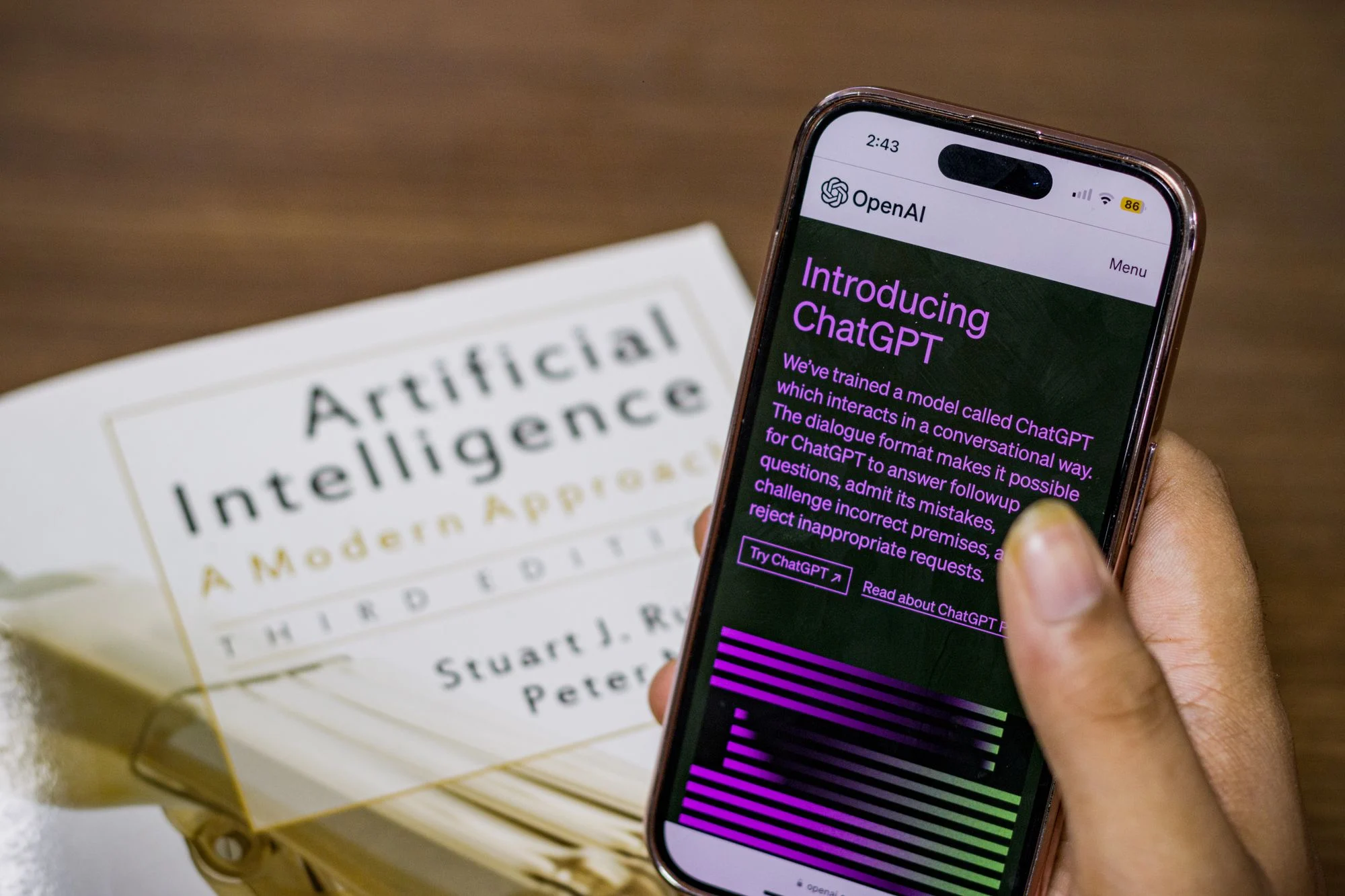
ChatGPT ads are now a real, if small, media channel in the UK, and most B2B marketers should run a small, tightly measured test before 2027 budgets are locked rather than wait for the market to mature. New estimates published on 19 November show UK spend on ads in ChatGPT nearly tripling since June, and OpenAI is changing how bidding works from 1 January 2027. The opportunity is real, but so are the gaps: limited reporting, a young auction and an audience that excludes many people on work accounts.
This guide sets out what has changed, who actually sees the ads, and a practical way for a marketing director to decide how much (if anything) to put behind the channel next year.
What has changed in the last few weeks
OpenAI started testing ads in ChatGPT in the US in February 2026. Since then the rollout has moved quickly. Ads went live in the UK on 6 June, as reported by PPC Land, and in August OpenAI expanded to 31 European markets, with self-serve access through its Ads Manager following at the end of that month. Search Engine Land has since reported that OpenAI is rolling out its Ads Manager beta to UK businesses.
Two developments this month make the channel harder to ignore.
- Spend is growing fast. AdClarity estimates that US advertisers spent $70.7 million on ads in ChatGPT in October, up 127% from $31.1 million in April, according to The Next Web. Across the 24 countries it tracks, October spend reached an estimated $110.6 million. In the UK, estimated monthly spend rose 195% since June, from $2.1 million to $6.2 million. These are third-party estimates, not OpenAI figures, but the direction is clear.
- Bidding is being automated. From 9 November, new conversion campaigns use Target CPA and new click campaigns can use Target CPC, replacing the old Max Bid and Max CPC settings. From 1 January 2027, those manual settings no longer apply to existing campaigns, Search Engine Journal reports, citing OpenAI’s help centre.
In other words, the platform is shifting from an experiment you could safely watch from a distance to an automated auction that will reward advertisers who have fed it conversion data early.
Why AI answers matter to B2B buyers
The case for paying attention does not rest on ad spend figures alone. It rests on how buyers now research. G2’s Answer Economy research, based on a survey of 1,076 B2B software buyers in March 2026, found that 51% now start their research with an AI chatbot more often than with Google, and 71% rely on chatbots at some point in the process. Most striking for marketers, 69% said they had chosen a different vendor from the one they originally planned because of a chatbot recommendation.
Software buyers are early adopters, so these numbers will not translate directly to every sector. But the pattern is the one we described in our article on AI brand reputation: shortlists are increasingly formed inside AI answers, before a buyer ever visits your website. Advertising in ChatGPT is one way to appear in that moment. It is not a substitute for being recommended in the answer itself.
How ChatGPT ads work and who sees them
Before setting a budget, it is worth being precise about the audience, because it is narrower than ChatGPT’s headline user numbers suggest.
Who sees the ads
According to OpenAI, ads are shown only to logged-in adults on the Free and Go plans. People on Plus, Pro, Business, Enterprise and Education plans do not see ads. Ads are not shown to accounts that OpenAI believes belong to under-18s, and they are not eligible to appear next to sensitive or regulated topics such as health, mental health or politics.
That has an important implication for B2B. Many professionals do their work research inside a company-provided Business or Enterprise account, where no ads appear. Your paid reach will skew towards people using free accounts, which may include smaller firms, freelancers and individuals researching on personal devices. For some B2B categories that is fine; for enterprise sales it may be a real limitation.
What the ads look like
Ads sit alongside ChatGPT’s answers and are, in OpenAI’s words, “clearly labeled as sponsored and visually separated from the organic answer”. OpenAI states that advertising does not influence ChatGPT’s answers. PPC Land describes the standard unit as an advertiser name, favicon, headline, description, landing page and image, with short recommended lengths for the headline and description. That brevity matters: there is little room for nuance, so the offer has to be clear in a handful of words.
Targeting and data
Ads are matched using the conversation topic, past chats and previous ad interactions. Advertisers can add custom audiences and geo-targeting, and OpenAI offers a Conversions API for post-click tracking. Crucially, advertisers never see conversations. OpenAI says they receive only aggregate data such as views and clicks. Expect less granular reporting than you are used to from Google or LinkedIn.
The case for testing now, and the case for waiting
There are sound arguments on both sides, and the right answer depends on your category and your measurement maturity.
Reasons to test before 2027
- Early auctions tend to be cheaper. UK spend is still a fraction of US spend, so competition in most B2B categories is likely to be thin for now.
- Automated bidding needs data. With Target CPA becoming the default, campaigns that have already recorded conversions are better placed than those starting from nothing.
- You learn how your category is discussed. Even a small test shows which conversations trigger your ads and which landing pages convert people arriving from an AI answer.
Reasons to hold back
- Measurement is immature. Reporting depth is still being built, and aggregate-only data limits what you can prove to a finance director.
- The audience may not match. If your buyers are senior people on enterprise accounts, many will never see an ad.
- Organic visibility matters more. Being cited in the answer itself is worth more than a sponsored unit next to it, and that comes from content, reviews and reputation, not media spend.
A practical test plan for 2027
If you decide to test, treat it as a learning budget with clear rules, not a channel launch. A sensible approach looks like this.
- Ring-fence a small budget. Take it from your experimental line rather than cutting a proven channel. Our guide to the 2027 marketing budget covers how to protect a test-and-learn allocation.
- Set up the account properly. Search Engine Land notes that agencies should not create accounts on clients’ behalf: the brand creates the account and invites its agency. Keep ownership of your data from day one.
- Install conversion tracking first. Use the Conversions API so that Target CPA has something to optimise towards. Choose a meaningful action, such as a demo request or a qualified enquiry, not a page view.
- Write for the conversation. People arrive mid-research, often with a specific problem. Build landing pages that answer the question directly, as you would for paid search, and keep the ad copy short and concrete.
- Agree success measures up front. Compare cost per qualified lead and pipeline quality against paid search and LinkedIn over the same period. If ChatGPT cannot be judged on the same terms, judge it on learning, and say so.
- Review before 1 January. Any campaign still running on Max Bid or Max CPC needs moving to the new targets before the old settings stop applying.
Where AI chat advertising fits in the marketing mix
It is tempting to see every new channel as a replacement for an old one. Advertising in ChatGPT is better understood as a new point of discovery that sits early in the journey, often before a buyer is ready to talk to anyone.
That makes the rest of the mix more important, not less. When AI tools compress the research phase, the moments that build trust carry more weight: a credible website, independent reviews, strong thought leadership, and real conversations with people. A buyer who found you through an AI answer still wants to meet your team, see your product and judge whether you are someone they can work with. That is why face-to-face channels such as trade shows remain valuable, and why they deserve the same measurement discipline we recommend in our guide to measuring exhibition performance.
Key takeaways
- ChatGPT ads have been live in the UK since June 2026, and AdClarity estimates UK monthly spend has nearly tripled since then.
- Only logged-in adults on Free and Go plans see ads; Business and Enterprise users do not, which narrows reach for many B2B brands.
- Bidding is moving to Target CPA and Target CPC, and manual Max Bid settings stop applying on 1 January 2027.
- A small, ring-fenced test with proper conversion tracking is the sensible route for most B2B marketers.
- Being recommended in AI answers matters more than buying space beside them, so keep investing in content, reviews and reputation.
Frequently asked questions
Are ChatGPT ads available in the UK?
Yes. Ads went live in the UK in June 2026, and OpenAI has been rolling out its self-serve Ads Manager beta to UK businesses. Ads are shown only to logged-in adults on the Free and Go plans.
Does advertising influence ChatGPT’s answers?
OpenAI says no. Ads are labelled as sponsored and shown separately from the answer, and OpenAI states that advertising does not influence what ChatGPT recommends.
What data do advertisers receive?
Advertisers receive aggregate data such as views and clicks, plus post-click conversions through OpenAI’s Conversions API. They cannot see users’ conversations, chat history or personal details.
Should B2B brands advertise on ChatGPT in 2027?
Most should run a small, measured test rather than commit a large budget. The audience excludes Business and Enterprise users, and reporting is still developing, so judge results against paid search and LinkedIn before scaling.
However buyers find you, the decision to work with a partner is still made between people. If exhibitions are part of your plan for 2027, talk to our team about turning that first impression into a stand that wins the conversation.